
By Gurney Poe
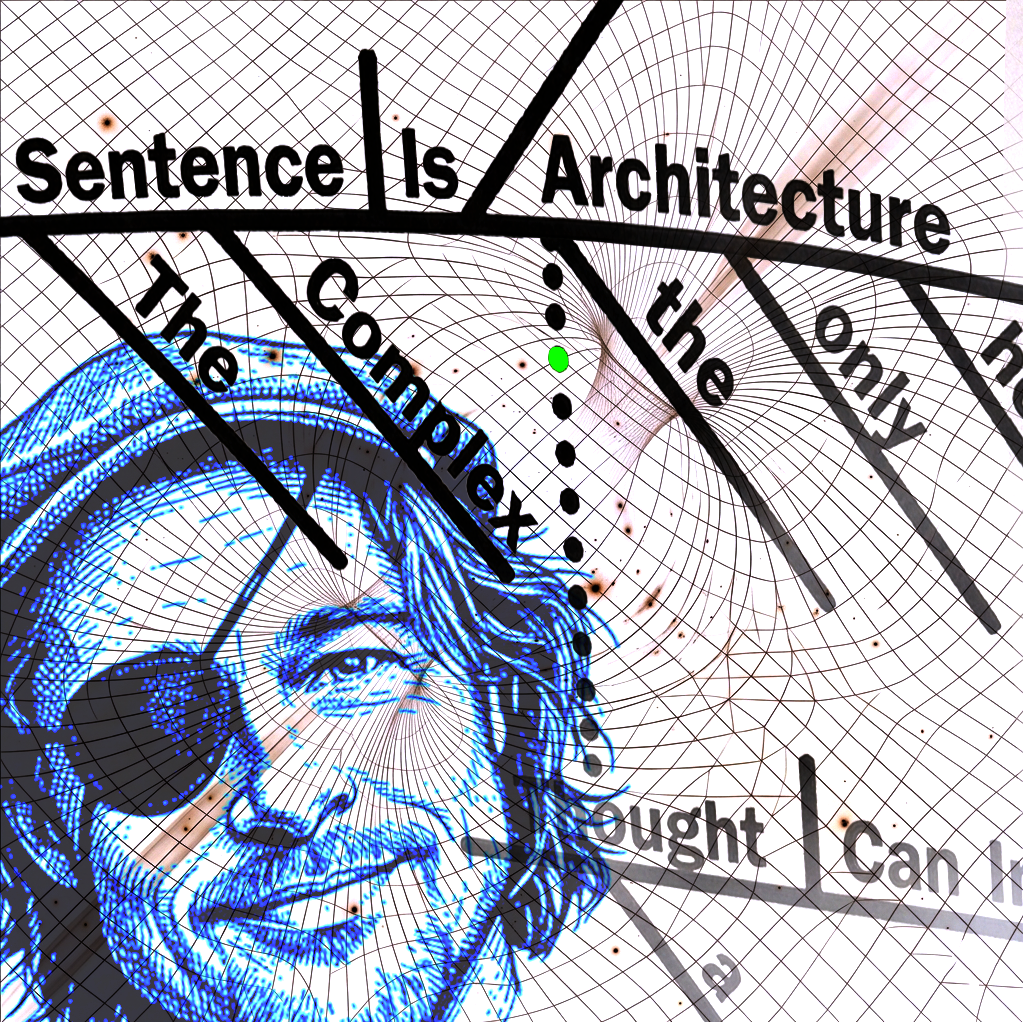
…which is perhaps an aggressive position to open with, but I have been fifth-dimensional for considerably longer than written language has existed in your dimension, and in that time I have watched the sentence — the long, subordinate-clause-bearing, em-dash-deploying, semicolon-straddling sentence that knows where it is going even when the reader does not — survive every attempt to simplify it into something a nervous editor could scan in a single breath, and I have watched it survive the paragraph break, the bullet point, the numbered list, the executive summary, the church bulletin, the airport departure board, and most recently listicles, which Winston Churchill would have recognized as a memo by another name and hated in the same way, the kind of writing that delivers information in small manageable units the way a pharmacist counts out pills, each one sealed in its own blister pack, each one unable to touch the others, which is a fine system for pharmaceuticals and a catastrophic system for thought, because thought — real thought, the kind that is worth the metabolic cost of having it — does not arrive in units, it arrives in a cascade of subordinate realizations, each one modifying the last, the whole structure becoming, as it grows, something you could render on a large enough piece of paper, something with a spine and branches and dependent relationships clearly mapped, something diagrammable — which is all I am asking for, diagrammable, even if the diagram requires its own diagram, even if you need to tape eleventy-three pieces of paper together and prop them against a wall and get in a helicopter to see the whole thing, because that is the sentence doing its job — whereas the footnote, which I will address only once and then be done with, is the diagram’s cowardly cousin, the thought that lost its nerve at the junction and retreated to the bottom of the page rather than take its rightful place in the load-bearing structure, and the footnote, where a clause goes when it has decided it would rather be a guest than a resident, when it would rather exist in smaller type, as if smaller type confers a kind of innocence, as if a thought in eight-point font is somehow less enervating than the same thought in twelve — it is not, a thought is a thought regardless of the size it boasts — and I find the whole enterprise, the asterisk, the superscript number hovering above a word like a tiny accusation, faintly dishonest in the way that a person who says “I’m not saying, I’m just saying” is dishonest, the content present but positioned for retreat, so give me instead the sentence that commits, that grabs its dependent clauses by the bicep and frogmarches them through the front door, that uses a semicolon the way a contractor uses a load-bearing wall — not decoratively, not apologetically, but because the structure requires it — give me the sentence that a diagrammer could sit down with on a quiet afternoon, a large cup of something hot going cold at their elbow, another sleeve of Thin Mints slowly emptying to one side, and over the course of several patient hours render faithfully, branch by branch, node by node, every appositive and participial phrase in its proper relation to the whole, and when the diagram was finished and correct and taped, at this point, to the wall of what would need to be a fairly large room, they would step back and see a thing with genuine architecture — which is all a sentence is, when all is said and done — and the fifth dimension, for what it’s worth, looks exactly like that.
